Season Tickets for the Soul: How Britain's Arts Centres Are Cultivating the New Cultural Devotee
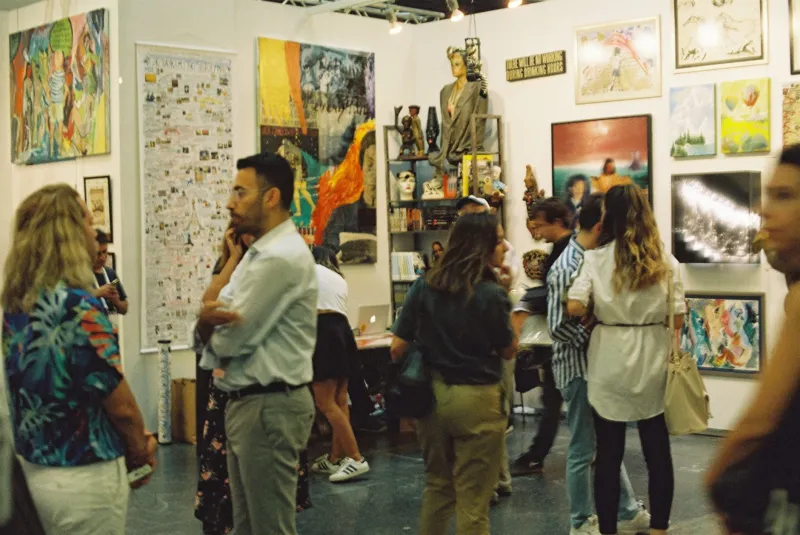
When a new season is announced at a well-regarded independent arts centre, something interesting happens. Before the critical coverage, before the social media amplification, before the press previews — a particular kind of audience member has already decided to attend. They do not need to evaluate the specific programme. They have evaluated the institution, over years of accumulated visits, and that evaluation has generated something considerably more durable than casual interest.
Call it institutional trust. Call it curatorial loyalty. What it most closely resembles, in the language of contemporary media culture, is the behaviour of a devoted television audience.
The Appointment Viewing Parallel
The comparison to prestige television is instructive, if imperfect. The cultural phenomenon that built audiences around specific writers, directors, and broadcast slots — the understanding that a particular creative voice, reliably expressed through a particular platform, was worth scheduling one's evening around — has found a structural equivalent in the programming cycles of Britain's most distinctive arts centres.
Audiences who return to the same venue season after season are not simply consumers of individual events. They are, in a meaningful sense, followers of a curatorial argument that unfolds over time. A group exhibition in autumn, a solo residency in winter, a performance programme in spring — these are not isolated offerings but chapters in an ongoing conversation, and the audience who has read every previous chapter arrives with a depth of engagement that first-time visitors cannot share.
This is, frankly, extraordinary in the current cultural climate. The dominant logic of digital content consumption is horizontal rather than vertical — broad rather than deep, diverse rather than devoted. The arts centre audience that returns reliably, season after season, to a single venue is swimming against a powerful current.
What Curatorial Voice Actually Means
The phrase 'curatorial voice' risks becoming meaningless through overuse, but in this context it carries specific weight. It refers not simply to aesthetic preference — a fondness for a particular movement or medium — but to a coherent intellectual and ethical position that expresses itself consistently across programming decisions.
An arts centre with a genuine curatorial voice will make choices that are recognisably its own: the kinds of artists it champions before they achieve wider recognition, the questions it returns to repeatedly, the contexts it creates for work that might otherwise be encountered in isolation. Over time, a devoted audience learns to read these choices — to understand not just what is being presented but why, and how it connects to what came before.
This is the cultural currency that engaged audiences have come to value. Intimate knowledge of an institution's curatorial logic is not merely passive consumption; it is a form of active participation. The returning visitor brings to each new season an interpretive framework accumulated through previous engagement. They are, in a real sense, co-authors of the meaning the work generates.
The Venues That Have Earned It
Across Britain, a number of arts centres have developed this quality of devoted following with particular consistency. What they share is not necessarily scale, location, or budget — the phenomenon is as visible in a converted warehouse in Sheffield as in a prominent Liverpool institution — but a quality of institutional conviction that communicates itself unmistakably to audiences over time.
These venues have resisted the temptation to chase novelty for its own sake. They have maintained programming commitments through financial difficulty and political pressure. They have developed relationships with artists that extend across multiple projects and years, so that audiences encounter creative voices in depth rather than in passing. And crucially, they have trusted their audience to engage with challenging, unfamiliar, and sometimes uncomfortable work — a form of respect that devoted visitors consistently identify as central to their loyalty.
The Bluecoat's own history offers a pertinent illustration. An institution that has maintained a distinctive creative identity across three centuries does not do so by reinventing itself according to each passing cultural fashion. It does so by remaining committed to a set of values — about what art can do, who it should serve, and what risks are worth taking — that audiences come to recognise and trust.
Against the Algorithm
There is a political dimension to this phenomenon that deserves acknowledgement. The cultural logic of algorithmic recommendation systems is fundamentally at odds with the kind of devotion that independent arts centres cultivate. Algorithms optimise for engagement metrics: clicks, shares, completion rates. They are structurally indifferent to depth, to accumulated understanding, to the kind of meaning that only emerges from sustained engagement with a coherent creative vision.
The arts centre audience that returns season after season is, consciously or otherwise, refusing this logic. They are asserting that some forms of cultural experience cannot be delivered on demand, that some meanings require patience and commitment, and that the relationship between an institution and its audience is worth tending over time.
This is not nostalgia. It is a genuinely progressive position — a refusal of the flattening tendency that treats all cultural content as equivalent, all engagement as interchangeable, all audiences as data points to be optimised rather than communities to be cultivated.
Building the Devoted Audience
For arts centres seeking to develop this quality of audience relationship, the implications are practical as well as philosophical. Programming decisions made primarily to generate individual viral moments tend to produce exactly that: isolated spikes of attention that leave no lasting residue. Programming decisions made in service of a coherent, long-term curatorial argument build something different and more valuable — an audience that returns not because they were targeted but because they were trusted.
The most devoted audiences in Britain's arts ecology did not appear fully formed. They were cultivated, over years, by institutions that took them seriously. That remains the most reliable path to the kind of cultural devotion that no algorithm can manufacture.