Stages of Disruption: Ten UK Performance Artists Rewriting the Rules of Live Art Right Now
Why Now, and Why Live?
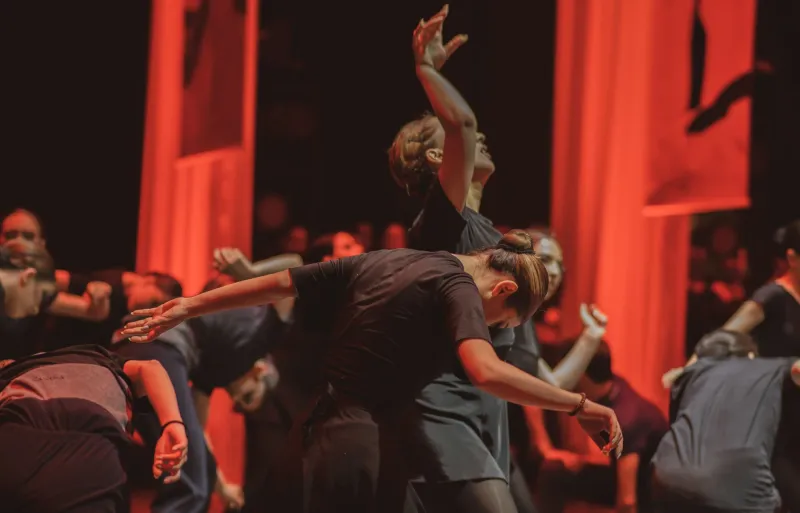
Performance art has never been tidier or more urgent than it is in Britain right now. At a moment when public discourse feels increasingly mediated — filtered through screens, platforms, and algorithmic echo chambers — the stubborn, unruly presence of a human body doing something unrepeatable in a shared space carries a charge that other art forms struggle to match. The ten artists gathered here are not united by aesthetic similarity or regional proximity. What connects them is a refusal to make work that leaves audiences unchanged.
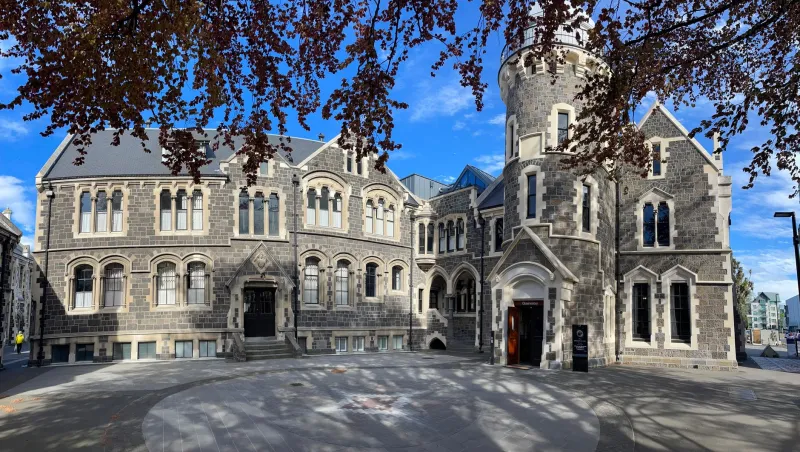
Bluecoat Arts Centre has long championed performance as a primary rather than peripheral art form. What follows is our selection of practitioners — emerging and mid-career, working across England, Scotland, Wales, and Northern Ireland — whose practices are redefining what live art can demand of the people who witness it.
1. Selina Nwulu — Language, Grief, and the Colonial Body
Based in: Leeds
Selina Nwulu's performance work emerges from her practice as a poet, but it moves well beyond the spoken word. Her durational piece Afterimage — in which she methodically transcribes colonial-era botanical records whilst her own body is progressively covered in soil — transforms archival research into visceral experience. The audience watches knowledge accumulate and obscure simultaneously. Nwulu is interested in what the body carries that language cannot articulate.
Catch her next: Commissioned for a new work at Leeds Playhouse's Transform festival in spring 2025.
2. Rhys Hollis — Architecture, Masculinity, and the Space Between
Based in: Cardiff
Rhys Hollis makes performance that inhabits the built environment as a kind of argument. His work Load-Bearing saw him spend six hours in a derelict Valleys terraced house, performing structural repairs whilst delivering a monologue about his father's redundancy following the miners' strike. The piece was raw, technically accomplished, and formally unlike anything else in Welsh performance. Hollis is suspicious of sentimentality and deeply attentive to class.
Catch him next: A new site-specific commission at Chapter Arts Centre, Cardiff, in March 2025.
3. Khadija Anderson — Ritual, Refusal, and Black Feminist Choreography
Based in: Birmingham
Khadija Anderson's performances are ceremonies of a kind — structured, deliberate, and imbued with a spiritual intensity that she traces to her Ghanaian heritage and her training in contemporary dance. Her signature work, The Unbecoming, involves a gradual shedding of costume layers that corresponds to a spoken deconstruction of the roles Black women are expected to inhabit. The final image — Anderson alone, still, facing the audience in silence — has been described by critics as 'devastating in its simplicity.'
Catch her next: Performing at mac Birmingham's Live Art season in February 2025.
4. Tomasz Wierzbicki — Migration, Memory, and the Performed Document
Based in: Manchester
Polish-born, Manchester-raised Tomasz Wierzbicki uses bureaucratic forms — visa applications, asylum interview transcripts, Home Office correspondence — as both material and script. In Right to Remain, he performed a two-hour piece in which audience members were invited to fill in immigration paperwork whilst he read aloud from his own naturalisation file. The work is meticulous, infuriating, and occasionally darkly comic. It does not allow its audience the luxury of passive sympathy.
Catch him next: HOME Manchester presents a new commission in April 2025.
5. Fiona Mackenzie — Landscape, Extraction, and the Highland Body
Based in: Inverness
Fiona Mackenzie's practice is rooted in the specific ecology and political history of the Scottish Highlands. Her outdoor durational performances — conducted in rain, wind, and near-darkness on land that has been subject to clearance, rewilding schemes, and energy extraction — ask what it means to be a body in a landscape that has been repeatedly claimed by outside interests. Peat lasted fourteen hours across a single midsummer day. Mackenzie has said she is less interested in being watched than in being witnessed.
Catch her next: Commissioned for Eden Court Theatre's outdoor programme, summer 2025.
6. Jude Okafor — Disability, Desire, and the Choreography of Access
Based in: Liverpool
Jude Okafor's work begins from his experience as a disabled Black man navigating arts spaces that were not designed with his presence in mind. His performances are simultaneously confrontational and joyful — a combination that wrong-foots audiences expecting either tragedy or triumph. In Access All Areas, Okafor choreographed a piece in which every aspect of the performance — from the venue's access arrangements to the post-show Q&A — was itself part of the work. The piece exposed, with surgical precision, the gap between institutional accessibility rhetoric and lived experience.
Catch him next: Bluecoat Arts Centre, Liverpool — spring residency and new performance, 2025.
7. Priya Sundaram — South Asian Feminism, Domesticity, and Rage
Based in: Leicester
Priya Sundaram's performances take place in domestic settings — kitchens, living rooms, hallways — and address the labour, expectation, and suppressed fury that accumulate in those spaces. Her piece Spice Rack was performed in twenty-three different private homes across the East Midlands, with audiences of no more than eight people at a time. Each performance was different; each host family was asked to contribute one object to the set. The intimacy was weaponised, deliberately and brilliantly.
Catch her next: Curve Theatre Leicester presents a new large-scale work in June 2025.
8. Aaron Callaghan — Queer History, Archive Fever, and the Drag of Time
Based in: Belfast
Aaron Callaghan's practice sits at the intersection of queer history, drag performance, and archival installation. His long-running project The Lavender Files reconstructs, through performance and fabricated documentation, the lives of queer people erased from Northern Irish public record. The work is meticulous in its research and explosive in its theatricality — Callaghan moves between scholarly lecture and full drag transformation within a single performance, collapsing the distance between history and the present tense.
Catch him next: Belfast International Arts Festival commission, October 2025.
9. Naomi Osei — Climate, Capitalism, and the Performing Earth
Based in: Bristol
Naomi Osei is making some of the most formally ambitious climate-focused performance work in Britain. Rather than producing agitprop, she creates durational pieces that implicate the audience in the very systems she is critiquing. In Carbon Offset, audience members were each given a small parcel of land — a printed certificate — and asked to tend it through a series of symbolic acts across the performance's three-hour duration. By the end, the land had been 'sold', 'mined', and 'flooded' through collective decision-making. The piece generated genuine distress.
Catch her next: Arnolfini Bristol, new commission in autumn 2025.
10. Marcus Tetteh — Sport, Blackness, and the Spectacle of the Performing Body
Based in: Sheffield
Marcus Tetteh's performances draw on his background as a former semi-professional footballer to interrogate the ways in which Black male bodies are consumed as spectacle in sport, entertainment, and art alike. His piece Transfer Window — in which he ran continuously for ninety minutes whilst a live commentator narrated his 'performance statistics' — was simultaneously exhausting, funny, and deeply troubling. Tetteh has a rare ability to make audiences laugh and then catch themselves doing so.
Catch him next: Site Gallery Sheffield, solo exhibition and performance programme, early 2025.
A Final Word on Why This Matters
Performance art is, by its nature, resistant to the logic of cultural austerity. It cannot be easily monetised, streamed at scale, or safely archived. It happens once, in a room, between people — and then it is gone, leaving only its residue in those who were present. In an era that prizes the reproducible and the scalable, that resistance is itself a political act.
The artists listed here are not waiting for institutional permission to do necessary work. They are already doing it — in cities and towns across Britain, in venues large and small, with and without adequate funding. Bluecoat Arts Centre exists to amplify that work, to create conditions in which it can flourish, and to insist — as we have for three centuries — that live art is not a luxury. It is how a society thinks about itself in real time.
Do not miss them.