Art Without Walls: How UK Arts Centres Are Transforming Pavements, Parks, and Public Life
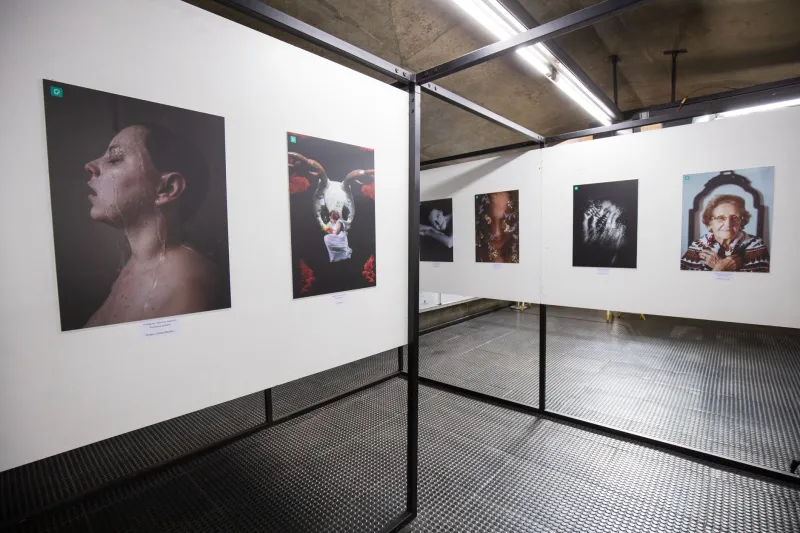
There is a particular kind of silence that settles inside a traditional gallery. It is reverential, deliberate, and — for a great many people across the United Kingdom — deeply unwelcoming. The white cube, that dominant architectural grammar of contemporary art presentation, was never a neutral space. It was always a declaration: that art belongs here, in this controlled environment, curated by these particular gatekeepers, and consumed by those who already know the unspoken rules of engagement.
A growing number of UK arts centres are now refusing that declaration entirely.
From the post-industrial terraces of Liverpool to the market squares of Norwich, from the coastal communities of Margate to the post-devolution cultural landscape of Cardiff, institutions are deliberately dismantling the boundary between the gallery and the street. They are commissioning work that cannot exist within four walls, building partnerships with communities who have historically been spoken about in arts discourse rather than spoken with, and asking a genuinely radical question: what happens when art loses its gatekeepers?
The Street as Exhibition Space
Site-specific installation has, of course, existed as a formal practice for decades. What distinguishes the current moment is not the ambition of individual projects but the institutional intent behind them. Arts centres are no longer treating public commissions as outreach appendages to their main programming — the work happening outside is increasingly understood as the main event.
Consider the logic of this reorientation. A gallery with a capacity of two hundred visitors, open five days a week, will reach a fraction of the audience encountered by a large-scale intervention installed at a city's central transport hub or along a well-trodden high street. But the argument for public art is not simply quantitative. It is about encounter — the unscheduled, unmediated moment when a person who would never choose to enter an arts centre finds themselves standing before something that unsettles, delights, or provokes them.
That involuntary encounter is, arguably, where art does its most honest work.
Institutions such as Bluecoat, operating from the heart of Liverpool's cultural quarter, have long understood that the city itself is part of the artistic proposition. The Georgian architecture, the layered histories of commerce and resistance embedded in the surrounding streets, the proximity to communities whose relationship with formal culture has been shaped by class, race, and economic marginalisation — all of this constitutes a context that any genuinely responsive arts programme must address.
Challenging the Authority to Define 'Worthy' Art
Perhaps the most politically charged dimension of this movement is its implicit challenge to cultural authority. For generations, the question of what constitutes worthy art has been answered by a relatively narrow professional class: curators, critics, funding bodies, and the institutional boards that govern them. Their judgements — however sincere — have reflected the particular cultural assumptions of their demographic.
When arts centres take their programming into public space, that authority is necessarily redistributed. A community co-production developed with residents of a housing estate in Salford is accountable to different values than a solo exhibition selected by a curatorial panel. The criteria for success shift. Relevance, resonance, and genuine participation become as meaningful as formal innovation or critical reception.
This is uncomfortable territory for some within the sector. There are legitimate questions about artistic rigour, about whether the imperative to be accessible can sometimes flatten the challenging edges that make art genuinely transformative. The most thoughtful practitioners hold this tension consciously rather than resolving it prematurely in either direction.
What is harder to defend, however, is the alternative — a cultural ecosystem in which institutional prestige consistently trumps community relevance, and in which the same voices repeatedly determine what the rest of the country ought to value.
Collaboration as Creative Practice
The shift towards public space has accelerated a parallel shift in how arts centres conceive of collaboration. The older model — in which an institution might consult a community before delivering a predetermined programme to them — is giving way to something more genuinely reciprocal.
Artists working in this mode often describe a process of sustained listening before any making begins. They spend time in a place, attending to its rhythms, its grievances, its particular forms of beauty and neglect. The resulting work carries traces of that attention in ways that are legible to the people who live there, even when — perhaps especially when — it is formally ambitious.
This approach demands a different kind of institutional patience. It cannot be programmed to a tight production schedule or evaluated through conventional metrics of footfall and press coverage. Funders and boards accustomed to legible deliverables sometimes find it difficult to assess. Yet the relationships built through this kind of work — between institutions and the communities they claim to serve — are precisely what determines whether an arts centre has genuine cultural roots or merely occupies a building within a postcode.
The Question of Permanence
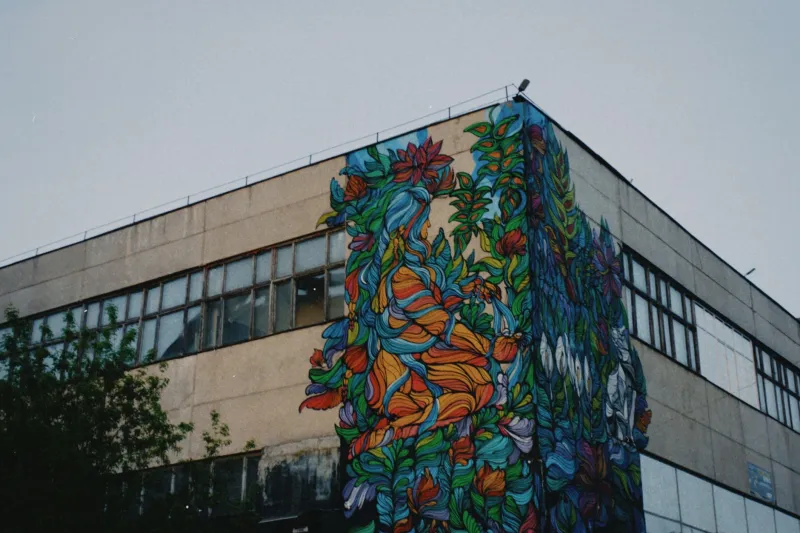
Public art also raises pressing questions about legacy. A gallery exhibition ends, the works are returned to storage or to their makers, and the space is reset for the next show. A mural painted on a community centre wall, a sculptural intervention in a park, a participatory archive installed in a library — these persist in ways that carry different obligations.
Who decides when a work has outlived its welcome? Who maintains it, and at whose expense? When a community's relationship to a piece of public art shifts — as communities themselves change over time — how does an institution respond with both sensitivity and honesty?
These are not abstract concerns. Across the UK, decommissioned public artworks have become flashpoints for wider debates about memory, representation, and the politics of permanence. Arts centres operating in public space must be prepared to hold those conversations with the same seriousness they bring to the work itself.
Rewriting the Social Contract of Culture
What unites the most compelling examples of this movement — from ambitious urban commissions to modest but deeply rooted community collaborations — is a revised understanding of what an arts centre is actually for.
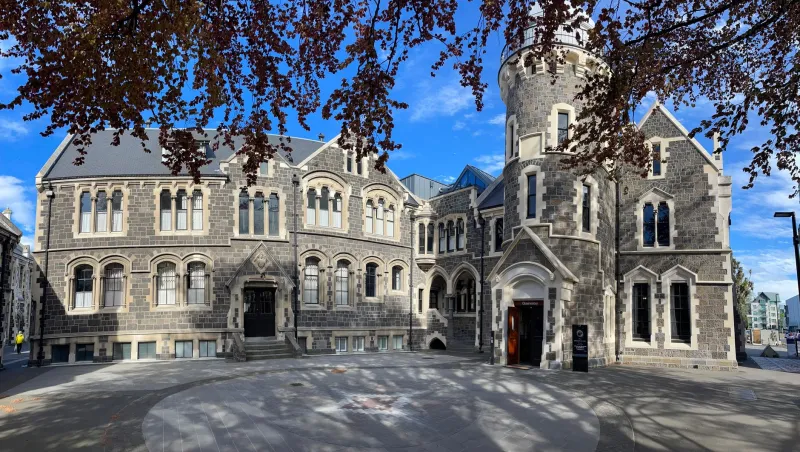
The building matters. The heritage it carries, the programmes it houses, the professional infrastructure it sustains — all of this has genuine value. But a building is not a community, and proximity is not the same as belonging. The arts centres that will prove most vital in the decades ahead are those that understand their walls as a starting point rather than a perimeter.
Britain's public spaces are contested. They carry the weight of colonial histories, economic inequalities, and ongoing arguments about whose stories are told in whose name. Art that enters those spaces without reckoning with that weight risks becoming merely decorative — a cultural amenity for the already-served.
Art that enters those spaces with rigour, humility, and genuine collaborative intent can do something far more significant. It can make the argument, in the most direct terms imaginable, that culture is not a privilege to be distributed from above but a capacity that already exists in every community, waiting for the conditions in which it can flourish.
That is the wager that the best of UK arts centres are currently making. It is, by any measure, worth watching.