Closer Than Comfort: How Intimate Venues Transform Proximity Into Profound Art
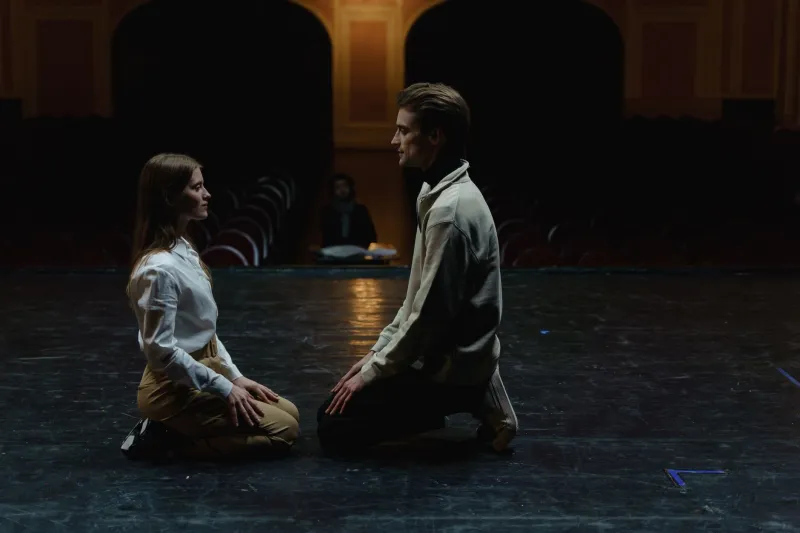
There is a particular quality of silence that descends in a small performance space moments before something begins. Not the hushed anticipation of a concert hall or the managed quiet of a major gallery opening — something rawer, more contingent. The audience can hear one another breathe. The performer can see individual faces. The room itself seems to lean in. This is not a limitation of scale. It is, increasingly, understood to be one of the most sophisticated artistic conditions available to contemporary practice.
At independent arts centres across Britain, that condition is not accidental. It is curated, protected, and in many cases deliberately amplified. The question worth asking — rigorously, and without sentimentality — is why intimacy works so profoundly, and what exactly is lost when it is traded for capacity.
What Neuroscience Tells Us About Shared Physical Space
The answer begins, perhaps surprisingly, in the brain. Research into what neuroscientists term "neural coupling" — the synchronisation of brain activity between speaker and listener, or between performer and audience — suggests that physical proximity dramatically intensifies this effect. Studies conducted at Princeton University's Neuroscience Institute found that the closer and more attentive an audience is, the more completely their neural responses mirror those of the person communicating with them. In practical terms: when you are fifteen feet from a performer rather than one hundred and fifty, your brain is not merely registering what you observe. It is, in a measurable sense, participating in it.
This is not metaphor. It is physiology. And it helps explain something that performers and audiences in small venues have long known intuitively — that something genuinely different happens in a cramped black-box theatre, a converted warehouse, or a gallery room repurposed for live art. The encounter is not simply more visible. It is more neurologically complete.
The Acoustics of Imperfection
There is also the matter of sound. Large purpose-built venues invest considerable sums in acoustic engineering — in eliminating flutter echo, controlling reverberation, ensuring that every seat receives an identical auditory experience. The result is often technically exemplary and experientially sterile. The room has been disciplined into submission.
Small venues rarely afford such intervention. Exposed brick walls, low ceilings, wooden floors, irregular geometries — these produce acoustic environments that are unpredictable, sometimes challenging, and frequently extraordinary. A vocalist performing in a room with natural reverb is not fighting the space; they are in conversation with it. The audience hears that conversation. They hear the room itself as a collaborator.
Several performers who have worked in venues like Bluecoat's studio spaces describe this relationship with the architecture as transformative. "You stop projecting outward and start listening inward," one theatre-maker noted after a residency in a low-ceilinged room that had previously served as a storage space. "The room tells you what the piece needs to become."
When the Audience Becomes Part of the Work
In larger institutions, the audience is necessarily abstracted. They are a demographic, a capacity figure, a statistical measure of engagement. In an intimate venue, they are individuals — and skilled artists know precisely how to work with that specificity.
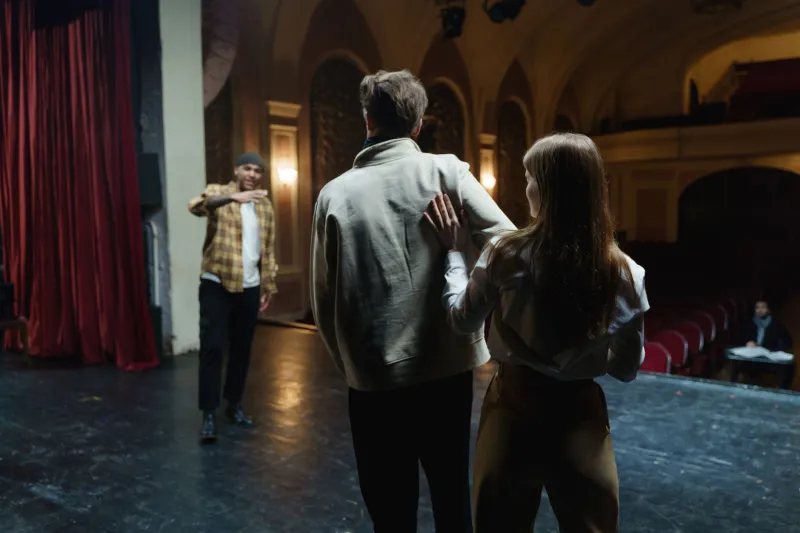
The proximity between performer and attendee in small spaces collapses the psychological buffer that scale provides. This can be uncomfortable. It is meant to be. Contemporary performance practice — particularly within the live art tradition that independent centres have long championed — frequently relies on this discomfort as its primary material. When a performer makes direct eye contact at close range, when the audience cannot retreat behind darkness and distance, the work demands a different quality of attention. It also invites a different quality of response.
Audience members who regularly attend performances at independent arts centres frequently describe a heightened sense of responsibility toward the work — a feeling that their presence matters, that their reactions are visible and therefore meaningful. This is not a side effect of intimacy. It is its central artistic argument.
Scale as Compromise
None of this is to suggest that large venues lack value or that ambitious programming requires small rooms. But it is worth being honest about what scale costs. When a venue grows — when it adds seats, expands its footprint, installs sophisticated production infrastructure — it necessarily trades certain qualities for others. The spontaneity that characterises a seventy-seat studio performance becomes logistically impossible at seven hundred. The visible vulnerability of a performer working without theatrical distance becomes inaccessible. The sense that this particular audience, on this particular evening, is witnessing something unrepeatable — that impression, so central to live art's power, is difficult to sustain at volume.
Independent arts centres understand this implicitly. Many of them have resisted expansion not from financial constraint alone, but from a principled commitment to what constrained space makes possible. The decision to remain small is, in this context, an artistic position.
The Memory of a Room
There is one further dimension worth considering: the way intimate experiences embed themselves in memory differently from large-scale ones. Psychologists studying episodic memory — the recollection of specific personal experiences — have found that emotionally intense, physically proximate encounters are encoded with unusual vividness and durability. The brain treats them as significant events, worth preserving in detail.
Ask anyone who has attended a genuinely affecting performance in a small venue and they will almost invariably describe it in precise sensory terms: the smell of the room, the texture of the chair, the exact position of the performer when a particular moment landed. These are not nostalgic embellishments. They are evidence of how deeply the experience registered.
This quality of memorability is not incidental to what arts centres do. It is, arguably, their most important function — not merely to present work, but to create the conditions under which work becomes unforgettable. Intimacy is not a workaround for institutions that cannot afford scale. It is a distinct and sophisticated artistic technology. And in the hands of the independent centres that have long understood its power, it remains one of the most generative forces in British cultural life.
The room leans in. The work begins. Something irreplaceable occurs.