Present Tense: Why the Physical Arts Centre Remains Irreplaceable in the Age of Infinite Scroll
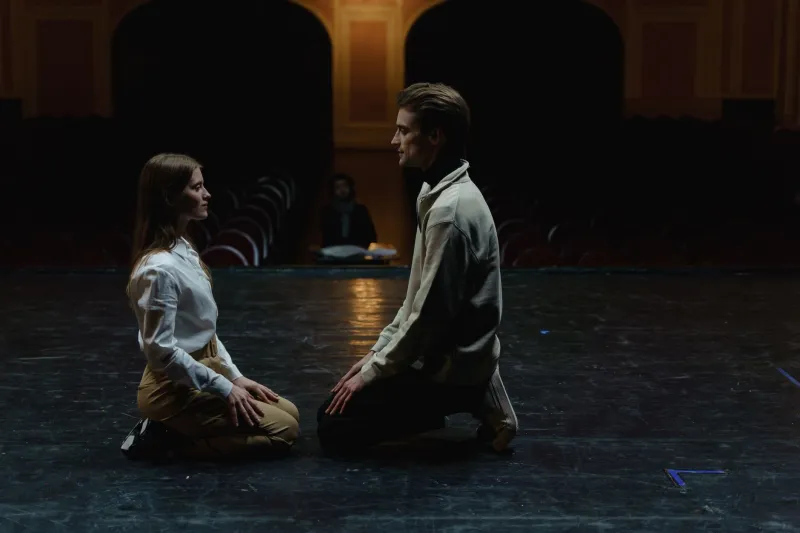
There is a particular quality of attention that descends upon a room when a performance is about to begin. The lights have not yet changed. The audience has not yet been given permission to settle fully into their seats. Something is about to happen that will not happen again — not in precisely this way, not with these bodies in this arrangement, not with the accumulated weight of this specific afternoon pressing against the walls. No streaming platform has yet found a way to bottle that.
The question of whether physical arts venues can survive — let alone matter — in a cultural landscape shaped by Netflix, Spotify, and the infinite scroll of social media has been posed with increasing urgency since roughly 2015. The pandemic years appeared, briefly, to accelerate the existential reckoning. And yet something curious happened instead. Audiences returned. Not merely out of habit or nostalgia, but with a sharpened appetite that surprised even the institutions themselves.
The independent arts centre, in particular, has emerged from that period not as a relic awaiting dignified retirement, but as a site of renewed and specific purpose.
What the Brain Actually Does in a Shared Space
The neuroscience here is worth taking seriously, because it reframes what might otherwise seem a sentimental argument. Research into what cognitive scientists term neural coupling — the synchronisation of brain activity between speakers and listeners, or between performers and audiences — suggests that co-presence is not merely pleasant but physiologically distinct from solitary media consumption. Studies led by Uri Hasson at Princeton University demonstrated that the brains of live audience members begin to mirror one another in ways that simply do not occur when the same content is consumed individually via screen.
This is not an argument against recorded or broadcast art. It is an argument for understanding live, shared experience as a different category of encounter altogether — one that produces collective meaning-making rather than parallel private consumption. The independent arts centre, with its smaller capacities and more intimate configurations, is arguably better positioned to generate these conditions than any large-scale venue. Proximity matters. The awareness that the artist can see you, that the performer is breathing the same recycled air, that the person beside you is having a recognisably similar but irreducibly different reaction — these are not incidental features. They are the substance of the thing.
Curation as a Political Act
There is a second dimension to this conversation that has nothing to do with biology and everything to do with power. Algorithms, by design, optimise for engagement — which is to say, for the familiar made slightly novel, the challenging made sufficiently comfortable. They are extraordinarily good at delivering more of what you already like. They are constitutionally incapable of delivering what you did not know you needed.
The programmer or curator working within an independent arts centre operates from an entirely different set of imperatives. Their job is not to confirm existing taste but to expand it; not to reassure but, on occasion, to unsettle. This is what we mean when we speak of risk-taking in cultural programming. It is not recklessness. It is a considered wager that an audience, trusted sufficiently, will follow a commissioning decision into unfamiliar territory and discover something there.
Artists themselves speak about this distinction with considerable feeling. A visual artist whose recent installation toured several independent venues across the North West described the experience of working with smaller institutions as fundamentally different from engaging with larger, more risk-averse organisations. "They said yes to the difficult version," she noted, "not the version that had already been explained to death." That capacity to say yes to the difficult version — to commission work before its value has been ratified elsewhere — is the specific cultural contribution of the independent arts centre, and it cannot be replicated by any platform whose primary accountability is to an advertiser or a shareholder.
The Post-Pandemic Reckoning
The years between 2020 and 2022 constituted an involuntary experiment in cultural life conducted entirely through screens. What that experiment revealed, with uncomfortable clarity, was the degree to which digital access to culture — however remarkable, however democratising in certain respects — could not substitute for the full experience of cultural participation. Attendance at streamed performances was high. Reported satisfaction was considerably more complicated.
The audiences who returned to physical spaces when it became possible to do so were not simply resuming an old habit. Many described a recalibration of priorities — a conscious decision to spend discretionary time and money on experiences that were unrepeatable, that required physical presence, that placed them in a room with strangers united by a shared intention. This is a significant cultural shift, and the independent arts centre is uniquely equipped to meet it.
Smaller institutions carry structural advantages that are rarely acknowledged in conversations dominated by funding anxieties. Their programming cycles are more agile. Their relationships with local communities are more textured and durable. Their curatorial identities are more legible — audiences know, in broad terms, what kind of encounter to expect, and they choose to arrive on that basis. This is not the passive consumption of a recommendation engine. It is an active, informed act of cultural participation.
Against Creative Homogenisation
Perhaps the most consequential argument for the independent arts centre in this moment is the one that concerns cultural diversity in the broadest sense. Algorithmic culture tends, over time, towards homogenisation — not through malice but through mechanism. Platforms that serve global audiences at scale inevitably gravitate towards content that travels across contexts without friction, which is to say content that has shed its local specificity, its formal difficulty, its capacity to disturb.
The independent arts centre is, by contrast, a machine for producing the locally specific, the formally adventurous, the deliberately uncomfortable. It is where a community's particular history, anxiety, and aspiration find aesthetic form. It is where artists who do not yet have a reputation are given a room and an audience and the chance to discover what they are capable of. It is where the work that will eventually reshape the culture is first permitted to exist in public.
This is not a small thing. In a media environment that can reach billions simultaneously and yet somehow contract the range of available experience, the room that holds two hundred people in a converted Georgian building in a British city is doing something that cannot be outsourced, automated, or streamed. It is keeping alive the possibility of genuine surprise — which is, in the end, what culture is for.
The intimacy is not a limitation to be overcome. It is, precisely, the point.