The Exhibition That Never Ends: How Living Curation Is Reshaping UK Arts Centres
The Problem with Finished Things
An exhibition, in its traditional form, is an argument made in advance. The curator assembles, contextualises, and presents; the visitor receives. However generously that transaction is framed — however many interpretive labels are provided, however many artist talks are scheduled — the fundamental dynamic remains one of completed thought meeting passive attention.
This model has served the art world well enough for long enough that its assumptions have become nearly invisible. We have grown accustomed to walking into rooms where every decision has already been made, where the conversation, in some essential sense, has already concluded. We are invited to observe its aftermath.
A growing number of UK arts centres are no longer satisfied with that arrangement. They are experimenting, with varying degrees of ambition and institutional nerve, with forms of programming that refuse to conclude — that remain genuinely open to the interventions of artists, visitors, and the unforeseeable pressures of the present moment.
What Living Curation Actually Means
The phrase 'living curation' has circulated in arts programming circles long enough to risk becoming meaningless, a piece of progressive vocabulary that flatters without specifying. It is worth being precise about what the most committed practitioners actually mean by it.
At its most fundamental, living curation describes a process in which the content, framing, and arrangement of a programme continues to evolve in direct response to the conversations it generates. An artist might alter a work mid-exhibition in response to audience feedback formally gathered through structured dialogue sessions. A programmer might introduce new voices — a poet, a scientist, a community activist — into an ongoing visual art presentation because a theme has emerged from public engagement that the original curatorial framework did not anticipate.
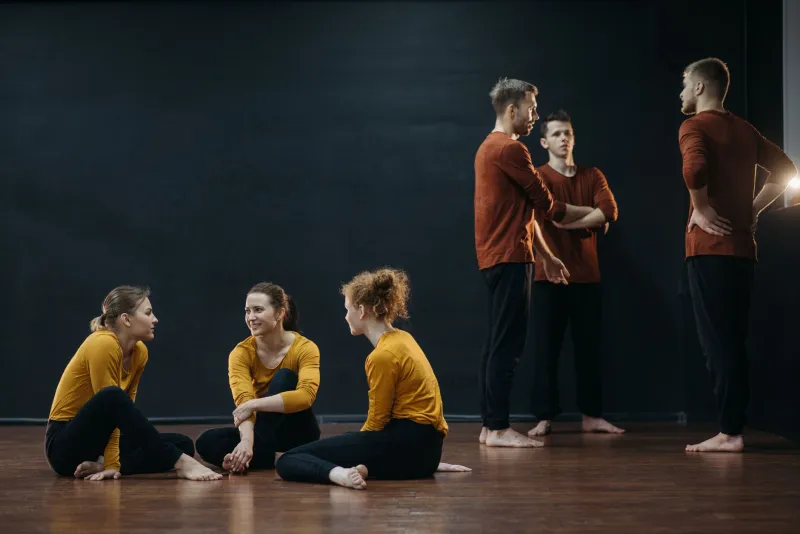
Some centres have introduced what they describe as 'open rehearsal' models — borrowing from live performance practice — in which works are shown in provisional states, explicitly inviting critical response that shapes subsequent iterations. Others have created permanent advisory groups drawn from their local communities whose input directly influences what is acquired, commissioned, and displayed.
The common thread is a willingness to treat curatorial authority as distributed rather than concentrated — to acknowledge that the people who encounter a programme have as legitimate a claim on its meaning as those who designed it.
The Operational Reality
The creative case for living curation is, to many in the sector, self-evident. Art that remains in genuine dialogue with its context is more likely to be alive to that context, more capable of the kind of provocation and surprise that distinguishes genuinely contemporary practice from the merely current.
The operational reality, however, is considerably more demanding. Institutions are, by their nature, creatures of forward planning. Funding applications are submitted months or years before programmes are delivered. Marketing copy must be written before the work is fully formed. Venue logistics — staffing, insurance, installation schedules — resist the improvisational rhythms that living curation demands.
Several UK arts centres have spoken candidly about the strain this creates. The tension between the administrative necessity of fixing things in advance and the curatorial aspiration to keep them fluid is not easily resolved. Some have found partial solutions: building explicit contingency into programme budgets, training front-of-house staff to facilitate rather than merely manage visitor encounters, and developing more flexible relationships with funders who are sympathetic to the principle of productive uncertainty.
Others have acknowledged that the model requires a different kind of institutional culture altogether — one in which the discomfort of not knowing what the programme will look like in three months is understood as a feature rather than a failure of planning.
Artists at the Centre
Perhaps the most significant shift that living curation demands is a fundamental renegotiation of the relationship between arts centres and the artists they work with. The traditional exhibition model, for all its limitations, offered artists a degree of protection: their work would be shown as they intended it, for the duration agreed, without interference.
Living curation, at its most rigorous, asks artists to accept something more uncomfortable — the possibility that their work will be changed by the encounter with its audience, that the conversation it generates will alter it, perhaps substantially. Not every artist is willing to accept those terms, and there is no obligation that they should be.
Those who do, however, often describe the experience as among the most creatively significant of their careers. The work becomes something other than what they made alone. It acquires a history, a set of accumulated responses and revisions, that makes it genuinely irreducible to any single moment of viewing. It becomes, in the fullest sense, a living thing.
The Audience as Co-Author
For visitors, the implications of living curation are equally significant. To encounter a programme that is explicitly unfinished, that openly invites your response as a meaningful contribution rather than a courtesy to be noted and filed, is a fundamentally different experience from the traditional gallery visit.
It requires, and in doing so cultivates, a different kind of attention — more active, more willing to hold uncertainty, more conscious of the visitor's own role in making meaning. This is not always comfortable. Some audiences find the absence of authoritative interpretation disorienting, even alienating. The curatorial voice, for all its potential paternalism, also provides a form of orientation that not everyone wishes to relinquish.
The most successful living curation programmes have found ways to hold that tension productively — providing enough structure to enable genuine engagement without so much that the conversation is predetermined. It is a difficult balance, and one that requires continuous, honest evaluation.
An Unfinished Argument
The shift towards living curation is, in the end, a shift in the arts centre's understanding of its own purpose. The institution that presents finished things is, implicitly, an authority — a place where cultural value has been assessed and confirmed. The institution that presents unfinished things is something more uncertain and more interesting: a site of ongoing negotiation, where the question of what matters and why remains genuinely open.
That openness is both the model's greatest strength and its greatest vulnerability. It demands more of everyone involved — programmers, artists, visitors, and funders alike. It offers, in return, the possibility of something that the sealed exhibition can rarely provide: the sense that what is happening here, right now, has not happened before and could not happen anywhere else.
In a cultural landscape increasingly saturated with reproducible, streamable, algorithmically curated content, that quality of irreducible singularity may prove to be the most radical offering an arts centre can make.