The Beautiful Wreckage: Why Britain's Independent Arts Venues Are Making Space for Magnificent Failure
The Night Everything Went Wrong (On Purpose)
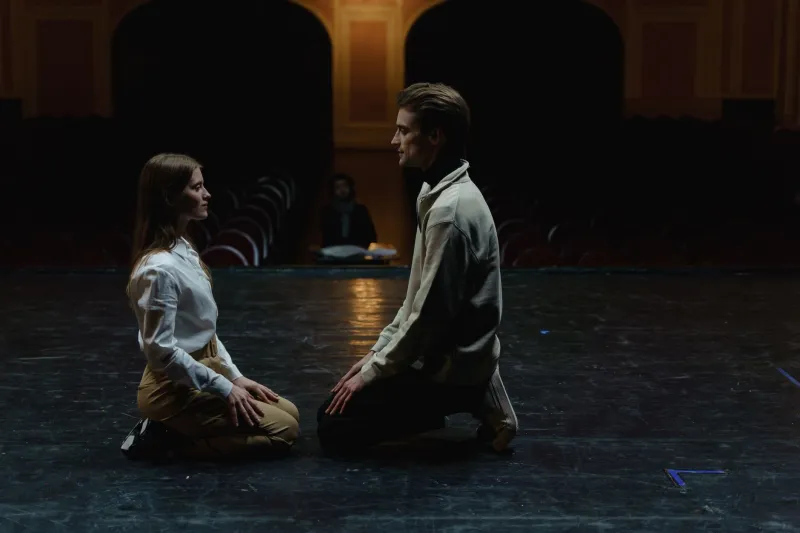
The flyer was unusually candid. 'This work is not finished,' it read. 'It may not finish. You are invited to witness the process, not the product.' The artist in question — a mid-career performance maker from Sheffield — had spent three years developing a piece about her grandmother's experience of the Windrush generation. On the night, she abandoned her script twenty minutes in, sat down on the stage floor, and spent the remaining forty minutes in open conversation with the audience about why the work kept defeating her.
The response was extraordinary. The post-show discussion ran for nearly two hours. Several audience members wept. The artist described it, afterwards, as the most important night of her professional life.
This was not an accident. It was a programme.
Institutionalising the Incomplete
Something quietly radical is happening in the rehearsal rooms and studio theatres of Britain's independent arts centres. Artists are being invited — actively encouraged — to fail in public, to present work that is unresolved, broken, or stubbornly refusing to become what it was supposed to be. Far from a concession to imperfection, these 'failure nights,' work-in-progress showcases, and deliberately unfinished presentations are emerging as some of the most generative creative events in the national programme.
The logic is straightforward, even if the institutional courage required to act on it is anything but. Commercial galleries and mainstream theatres operate under the logic of the finished product — the polished show, the sellable edition, the five-star review. Independent arts centres, unburdened by those particular commercial imperatives, can afford to ask a different question: what if the struggle itself is the art?
'We started our Unfinished Business series almost by accident,' says one programme director at a Liverpool arts centre who asked not to be named. 'An artist pulled out of a residency showcase because they felt the work wasn't ready, and rather than cancel, we asked them to come and talk about why it wasn't ready. The audience was transfixed. We realised we'd accidentally created the most honest piece of programming we'd done all year.'
Why Failure Feels Dangerous — And Why That Matters
To understand why this matters, it helps to understand how profoundly the British arts sector has internalised the logic of success. Funding applications require projected outcomes. Grant reports demand evidence of impact. Critical culture rewards completion and penalises uncertainty. The result, as many artists will acknowledge in private if not in public, is a sector that has become extraordinarily skilled at producing the appearance of confidence while quietly suppressing the experimental impulse that makes art worth having in the first place.
Performance artist and educator Jonah Whitfield has been thinking about this dynamic for years. His practice deliberately courts collapse — he designs performances with structural vulnerabilities built in, so that something will go wrong, and the question is only what and when.
'The most honest thing I can do in front of an audience is let them see me not knowing,' he says. 'We've built a culture that treats not-knowing as shameful. But not-knowing is where everything interesting starts. If I come on stage with all the answers, I'm not making art — I'm making a product demonstration.'
This distinction — between art as demonstration and art as inquiry — is central to the failure-positive movement gaining traction across the independent sector. It is not about lowering standards. It is about redefining what standards are for.
The Curator as Risk Underwriter
For all the creative logic of celebrating failure, the practical burden falls disproportionately on curators and programme directors, who must persuade boards, funders, and audiences that an evening of productive uncertainty is worth their investment of time and money.
This requires a particular kind of institutional nerve. 'There's always a conversation with the board,' admits one arts centre director. 'You're asking people to fund something that might, by design, not work. That's a hard sell. But we've found that when we frame it correctly — when we explain that we're creating conditions for genuine discovery rather than just tolerating sloppiness — people get it. Audiences, especially, are far more sophisticated than we give them credit for.'
Audience appetite for unfinished work is, in fact, one of the most consistent findings from venues that have introduced failure-positive programming. Post-event surveys routinely reveal higher levels of engagement, more sustained conversation, and a stronger sense of personal connection to the work than comparable finished productions generate. There is something about witnessing struggle, it seems, that activates empathy in ways that polished performance cannot always reach.
Learning from the Edges of the Sector
The failure-positive model has antecedents in experimental theatre traditions — from the scratch nights pioneered by The Yard in London to the durational work-in-progress culture of performance art festivals across Scotland and Wales. What feels genuinely new is the ambition to move these practices from the margins of programming into something closer to the centre.
At several arts centres, failure nights are now ticketed events with waiting lists. At others, 'unfinished' has become a curatorial category in its own right, with dedicated strands in the annual programme. The Sheffield-based performance maker whose story opened this piece has since developed her Windrush work into a full production — but she credits the failure night with being the breakthrough moment that made it possible.
'I needed to be seen not knowing,' she says simply. 'Once an audience witnessed that, I stopped being afraid of it. And when I stopped being afraid, the work could finally begin.'
The Commercial Gallery Cannot Do This
It is worth being explicit about what makes independent arts centres uniquely equipped for this kind of programming. Commercial galleries operate within a market logic that fundamentally cannot accommodate failure — an unfinished work is an unsellable work, and an evening of productive collapse is an evening of lost revenue. Mainstream theatres, dependent on subscription audiences and critical reputation, face analogous constraints.
Independent arts centres occupy a different position. Sustained by public funding, membership models, and a mission that explicitly values experimentation, they have both the freedom and the obligation to take risks that the market will not. Failure nights are not a niche indulgence — they are one of the clearest expressions of what public arts funding is actually for.
Towards a Culture of Creative Courage
The broader ambition behind the failure-positive movement is nothing less than a cultural shift: a reorientation of how Britain thinks about artistic risk. In a sector that has grown increasingly risk-averse under the pressures of austerity and accountability culture, the arts centre that makes space for magnificent failure is performing a genuinely oppositional act.
It is saying, quietly but firmly, that the value of art is not reducible to its outcomes. That the process of making — with all its false starts, abandoned directions, and moments of productive bewilderment — is itself a form of cultural production worth witnessing and supporting.
That, perhaps, is the most radical thing an arts centre can do. Not to present the best work. But to make it safe — genuinely, structurally safe — to make the worst, and to find, in that wreckage, something that no finished product could ever contain.