Midnight Residencies: The Hidden Lives of Britain's Arts Centres After Dark
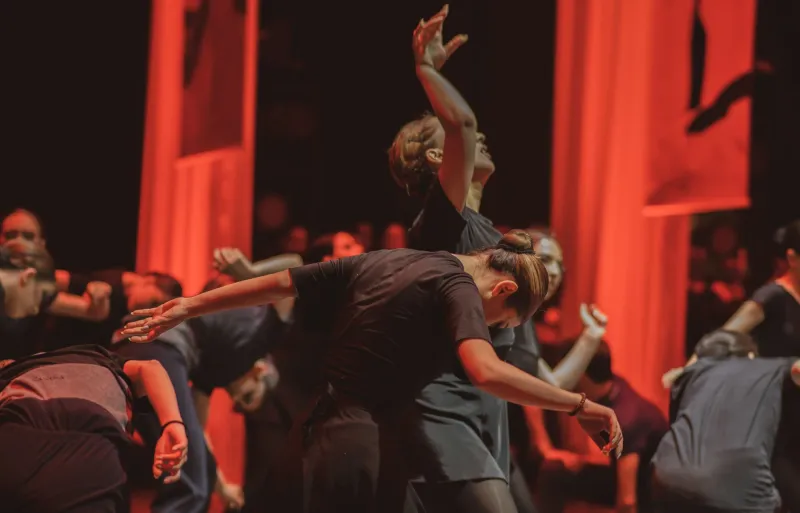
The clock reads half past eleven. Outside, the street is quietening. Inside, a choreographer is running the same forty-second sequence for the thirty-seventh time, her breath visible in the cold air of an unheated studio. Somewhere beneath her, in a basement space that doubles as a print workshop, a poet is setting type by hand. Neither of them knows the other is there. Both of them are exactly where they need to be.
This is the reality of Britain's independent arts centres after hours — not the locked-up, dormant institutions that the public might imagine, but living, breathing ecosystems that operate according to rhythms entirely their own.
The Myth of the Closed Door
The conventional image of an arts centre — visitors filing through during daylight hours, exhibitions illuminated for consumption, performances beginning and ending at civilised times — captures only a fraction of what these spaces actually do. For many of Britain's most significant independent venues, the closing of the public doors represents not an ending but a transition. The building does not sleep. It simply changes its audience.
This is not a recent development, nor is it incidental. Many of the UK's most cherished arts institutions were founded explicitly on the understanding that creative work does not observe business hours. The residency model — in which artists are granted sustained access to a space over days, weeks, or months — has always implied nocturnal activity. When you give an artist a studio and a key, you are implicitly acknowledging that inspiration arrives on its own schedule.
What has changed in recent years is the formalisation of this understanding, and the growing recognition that the after-hours life of an arts centre is not merely a logistical necessity but a distinct cultural phenomenon worthy of serious attention.
Keys to the Kingdom
Speak to any artist who has held a residency at a UK arts centre, and the conversation will almost inevitably turn to what happens after midnight. There is something about the quality of attention available in an empty building that cannot be replicated during opening hours.
"The space becomes yours in a way that it simply cannot be when there are visitors moving through it," explains installation artist Tomás Guerrero, who spent three months in residence at a Liverpool arts centre last year. "During the day, you are always aware of being observed, of the work existing in relation to an audience. At two in the morning, you can fail completely without consequence. You can try things that you know will not work, and that freedom is absolutely essential."
This freedom from observation is, paradoxically, one of the most productive conditions that arts centres can offer. The pressure of the public gaze — even a sympathetic, arts-literate public — exerts a subtle conservatising force on creative practice. Work made in private, in the small hours, with no one watching, tends towards a different quality of risk.
The Rehearsal as Sacred Space
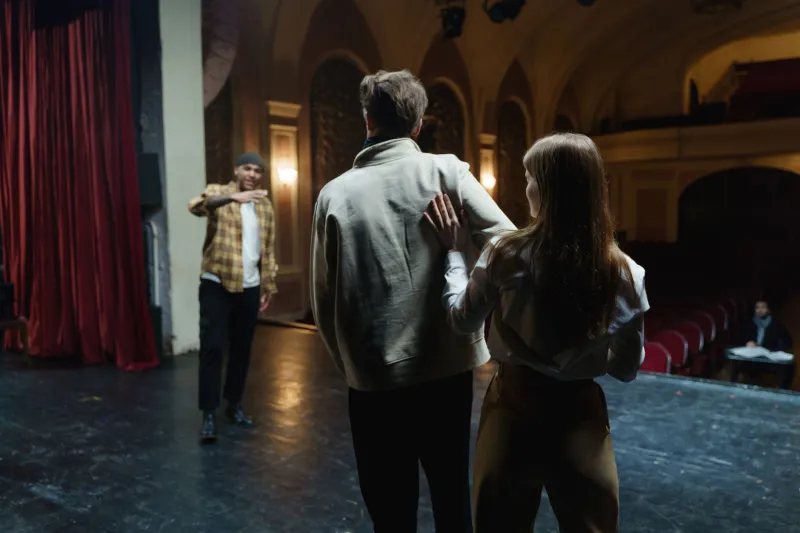
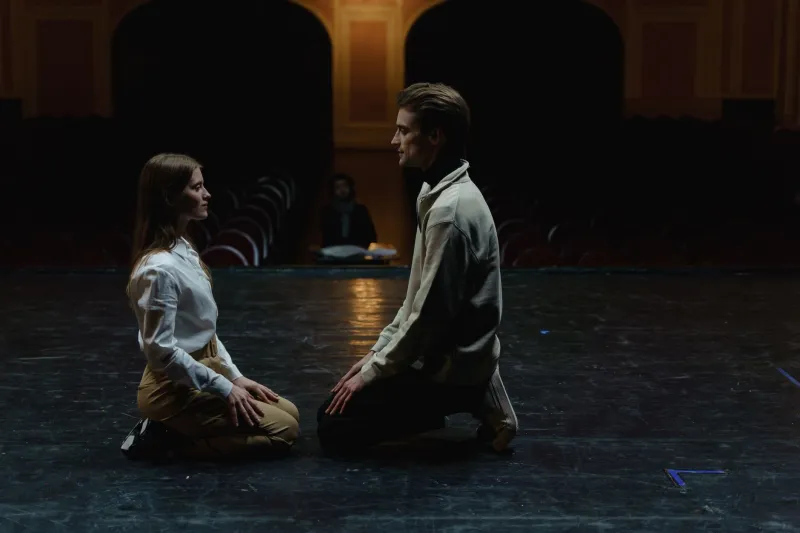
For performance artists and theatre-makers, the after-hours arts centre serves a function that is almost liturgical. The rehearsal — particularly the late rehearsal, when exhaustion has dissolved the performer's social defences — occupies a unique position in the creative process.
Director and performer Kezia Osei, whose company has been based at a Birmingham arts centre for four years, describes the nocturnal rehearsal as a distinct mode of working. "There is a particular quality of attention that emerges after ten o'clock," she says. "The body is tired, the critical mind is quieter, and something more instinctive takes over. Some of our most important breakthroughs have happened at midnight, when everyone was too exhausted to be precious about the work."
This observation is echoed by movement practitioners, musicians, and spoken word artists across the country. The late-night rehearsal has its own phenomenology — a specific quality of presence and risk that daylight working rarely achieves.
Clandestine Exhibitions and Informal Economies
Not all of what happens in arts centres after dark is formally sanctioned. Britain's independent arts ecology has always maintained a productive relationship with informality, and the after-hours spaces of many venues host events and gatherings that exist in a creative grey zone — not quite official programming, not quite trespass.
These might include informal critique sessions in which artists show work-in-progress to trusted peers, impromptu performances that arise from late-night conversations, or small exhibitions mounted for a single evening for an audience of ten people who have been texted the address that afternoon.
Such events are rarely documented and almost never reviewed. They exist in the oral culture of creative communities, passed between artists as recommendations and rumours. Their value lies precisely in their ephemerality — they are not designed to be preserved or commodified, but to serve the immediate needs of the people present.
"The after-party is often more important than the opening," observes curator Niamh Callahan, who has worked in independent arts spaces for fifteen years. "That is where the real conversations happen, where collaborations begin, where artists say the things they cannot say in public. If you want to understand what is actually happening in British contemporary art, you need to be in the right building at the right time, and that time is rarely during opening hours."
The Economics of Darkness
For the arts centres themselves, the after-hours economy serves a vital practical function. Residency fees, studio lettings, and late-night venue hire contribute meaningfully to the financial sustainability of spaces that are under perpetual funding pressure. The building that generates income only during its public opening hours is a building operating at a fraction of its potential.
This economic reality has prompted some venues to formalise what was previously informal — creating structured late-night residency programmes, midnight studio access schemes, and after-hours event licences that allow the nocturnal life of the building to generate revenue without sacrificing its essential character.
The risk, of course, is that formalisation kills the very quality that makes after-hours creative life valuable. When the spontaneous becomes scheduled, when the informal becomes a programme, something is inevitably lost. The most thoughtful arts centre directors are acutely aware of this tension.
What the Darkness Makes Possible
There is a reason that artists, across cultures and centuries, have sought out the night. Darkness narrows the field of attention. It removes the visual noise of the everyday. It creates conditions in which the work — whatever form that work takes — can be encountered with a directness that daylight rarely permits.
Britain's independent arts centres, at their best, understand themselves as guardians of this possibility. The key given to a resident artist is not merely a practical instrument. It is an act of trust — an acknowledgement that the most significant creative work often happens in the margins, in the hours between closing time and dawn, in the spaces that the public never sees.
To understand what these venues truly are, you cannot simply attend the opening. You must also be willing to stay until the lights go out.