Turn It Down or Stand Your Ground: The Acoustic Politics of Experimental Art Spaces
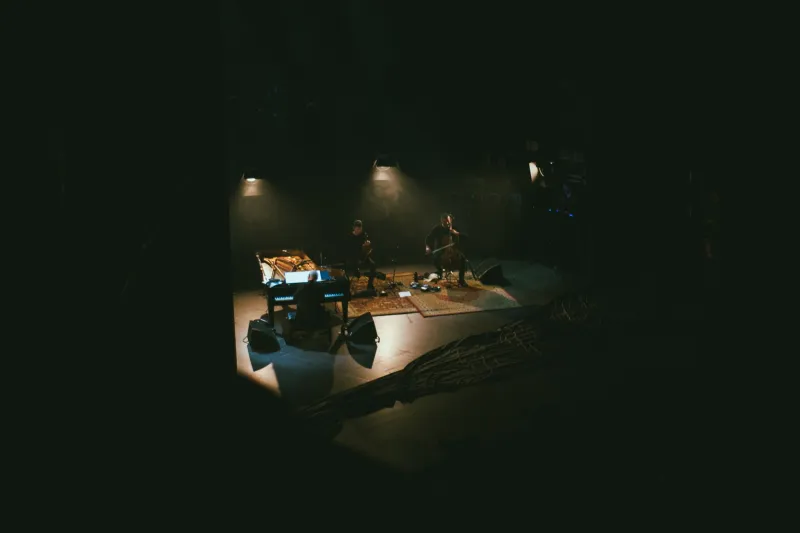
At some point during a particularly uncompromising sound performance — the kind that operates at frequencies designed to unsettle rather than please, that treats silence as an adversary and the audience's physical comfort as a negotiable variable — someone will complain. It may be a neighbour. It may be a council officer responding to a noise nuisance report. It may, in the most revealing cases, be a trustee.
What happens next tells you a great deal about what an arts centre actually believes, as opposed to what it states in its mission documents.
The Sound of Institutional Principle
Experimental music and sound art occupy a peculiar position within the ecology of contemporary arts programming. They are, on one hand, among the most intellectually and historically significant practices in twentieth and twenty-first century art — from the radical sonic explorations of the post-war avant-garde to the noise music traditions that have influenced everything from electronic music to installation practice. On the other hand, they are among the most immediately, viscerally alienating art forms for audiences and non-audiences alike.
This is not incidental. Many practitioners working in experimental sound are explicitly engaging with discomfort as a medium. The frequencies that make listeners physically uneasy, the volumes that feel aggressive, the durations that test endurance — these are not production failures. They are the work. To demand that such work be quieter, shorter, or more acoustically considerate is not to improve it. It is to destroy it.
Arts centres that programme this work while simultaneously committing to neighbourhood sensitivity face a structural contradiction that cannot be resolved through goodwill alone. At some point, a choice must be made.
The Neighbourhood Is Not the Enemy
Before proceeding, it is worth being clear about what this argument is not. It is not a case for arts centres as acoustic fortresses, indifferent to their communities and legally insulated from accountability. The relationship between a cultural venue and its surrounding neighbourhood is a genuine and important one, and the communities that host arts centres — particularly in urban areas where gentrification has already restructured local life in complex ways — have legitimate interests that deserve serious consideration.
The resident who cannot sleep because a sound installation is running until midnight has a real grievance. The local authority officer enforcing noise regulations is not, in most cases, acting as an agent of cultural suppression. These are ordinary civic realities, and an arts centre that treats them with contempt is not being radical — it is being reckless.
The question is not whether community relationships matter. They do. The question is whether the management of those relationships has begun to shape programming decisions in ways that compromise artistic integrity, and whether arts centres are honest with themselves about when this is happening.
When Accommodation Becomes Capitulation
There is a spectrum of acoustic compromise, and not all points on it are equally defensible. Investing in building insulation, scheduling the most challenging sound work earlier in the evening, communicating in advance with immediate neighbours about particularly intense performances — these are reasonable civic accommodations that do not fundamentally alter the work being presented.
But something qualitatively different occurs when programming decisions are made preemptively, before any complaint has been received, on the basis of anticipated community disapproval. When an arts centre declines to programme a particular artist because their work is 'too loud', or edits a performance brief to ensure that sound levels remain within an imagined comfort zone — this is no longer accommodation. This is self-censorship performed in advance of any actual pressure.
The insidious quality of this kind of preemptive compromise is that it rarely announces itself as such. It arrives dressed as pragmatism, as community sensitivity, as 'knowing our audience'. The curatorial instinct that might have championed a genuinely challenging sound artist is overridden not by external pressure but by an internalised anticipation of it. The result is a programme that is quieter, safer, and less interesting than the institution's stated values would suggest.
The Progressive Venue's Acoustic Obligation
If an arts centre describes itself as progressive — and a significant proportion of Britain's independent arts spaces do, in terms both explicit and implied — then it is obliged to examine its acoustic politics with some rigour. Progressive cultural programming is not simply a matter of representing diverse voices or addressing urgent social themes. It includes a commitment to forms of art that disturb received notions of what culture should feel like.
Experimental sound work, in particular, has a long and serious tradition of challenging the boundaries between music and noise, between art and aggression, between the gallery and the street. This tradition has produced some of the most significant work in the contemporary arts canon. An arts centre that is genuinely committed to progressive programming cannot simply admire this tradition from a safe distance while quietly ensuring that its own programme never actually enacts it.
This does not mean that every experimental sound performance should be programmed at maximum volume with no regard for consequences. It means that when genuine acoustic tension arises — when the work demands something that the surrounding community finds uncomfortable — the institution should be capable of making and defending a principled decision, rather than defaulting to the path of least resistance.
Negotiating Without Surrendering
The most sophisticated response to acoustic conflict is neither defiance nor capitulation. It is what might be called principled negotiation — a genuine engagement with community concerns that nevertheless maintains clarity about what cannot be compromised without destroying the work.
This requires arts centres to be more honest in their community communications than is typically comfortable. To say, clearly, that a particular performance involves sounds that some people will find unpleasant or aggressive, and that this is intentional and artistically significant, is more respectful to both the work and the community than the vague gestures towards 'challenging contemporary practice' that appear in most programme notes.
It also requires institutions to invest in the physical infrastructure that makes acoustic coexistence possible — not as a means of avoiding difficult conversations, but as a means of enabling difficult work to be presented with integrity.
The arts centre that turns down the volume without acknowledging that it has done so, that smooths over the acoustic edges of provocative work in the interests of a quiet life, is not serving its community. It is deceiving it — offering the appearance of challenge while quietly removing the substance. That, ultimately, is the greater betrayal: not the noise that disturbs the neighbourhood, but the silence that pretends nothing has been lost.